Martinsburg Homeowners: Don’t Ignore These Spring Gutter Warning Signs
Spring in the Eastern Panhandle brings heavy rains and rapid temperature swings—perfect conditions for hidden gutter problems to surface. Catching these early can save your roof, siding, and foundation from serious water damage. We’ve seen it all in Hedgesville, Inwood, and right here in town: small issues today become big repairs tomorrow.
Why Spring Is the Critical Season for Gutter Checks
Winter leaves behind debris, ice dam remnants, and loose fasteners that spring rains quickly expose. Martinsburg’s freeze-thaw cycles loosen seals and misalign sections, making early inspection non-negotiable.
By April, pollen and seed pods clog downspouts faster than fall leaves. If you skipped a late-autumn cleaning, your system is likely holding months of buildup.
A single overnight storm can dump 1-2 inches here. Clogged gutters overflow in minutes, sending water under your roof or into basements.
6 Spring Gutter Warning Signs You Can Spot from the Ground
Water spilling over the sides during rain is the most obvious red flag. Even light drizzle should flow smoothly to downspouts, not cascade like a waterfall.
Sagging sections indicate trapped water or failing hangers. In older homes around Falling Waters, we often find rusted spikes pulling away from fascia.
Stains or streaks on siding or soffits mean water is escaping the channel. Dark marks below seams are classic signs of slow leaks.
Seedlings or weeds sprouting in the trough? Organic matter has been sitting long enough to take root—common after a mild winter like we had this year.
Peeling paint or rust spots on the gutter itself signal prolonged moisture exposure. Aluminum gutters resist rust, but steel ones in Spring Mills often show pitting first.
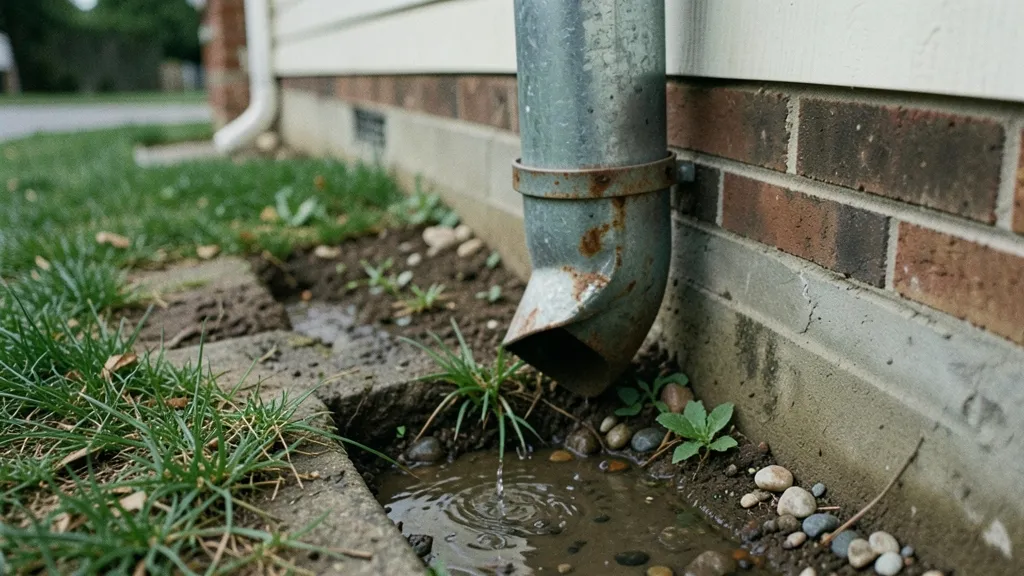
Erosion or washout at the base of downspouts suggests water isn’t being directed far enough from the foundation. Check for small trenches or displaced mulch.
What’s Happening on Your Roof Tells a Story
Granule buildup in gutters often comes from aging shingles. If you see what looks like coarse sand, your roof may need attention soon—especially after hail storms common in Bunker Hill.
Overflow marks on the roof edge (often a dark line) mean gutters couldn’t handle runoff. This accelerates shingle deterioration and can lead to leaks.
Ice dam scars—peeling paint or curled shingles at the eaves—are lingering winter damage. Properly sloped and sealed gutters prevent recurrence next year.
Safely inspect from the ground with binoculars. Never lean a ladder against gutters—they’re not designed to support weight.
Downspout Problems Are Just as Serious
A downspout that drips at the joints or base needs resealing or realignment. In heavy clay soils around Martinsburg, improper drainage causes foundation cracks over time.
Clogs often lurk where downspouts meet the gutter or at underground drains. A garden hose can flush minor blockages, but stubborn ones require professional snakes or pressure washing.
Missing or damaged splash blocks let water pool near the home. We recommend extending downspouts at least 5 feet from the foundation, especially on sloped lots.
| Issue | Likely Cause | Risk if Ignored |
|---|---|---|
| Water dripping at seams | Loose fasteners or failed sealant | Fascia rot, basement leaks |
| No water exiting at base | Clogged elbow or underground drain | Overflow, soil erosion |
| Downspout detached | Rust, wind damage, or improper installation | Water damage to siding or foundation |
| Splash block cracked/missing | Age, freeze-thaw, or lawn equipment | Erosion, foundation settlement |
When DIY Cleaning Isn’t Enough
If your gutters are two stories up, or your roof has a steep pitch, leave it to pros. We use extension poles and stabilized ladders to safely reach every foot of gutter and downspout.
Hidden damage—like separated seams or corroded end caps—often goes unnoticed until a pro inspects. Inwood’s older homes frequently have original gutters that need reinforcement or replacement.
Recurring clogs may mean your system lacks proper slope or needs gutter guards. We assess pitch and recommend solutions like micro-mesh screens for pine needle-prone areas.
The Hidden Costs of Ignoring These Signs
Water backing up under shingles leads to roof deck rot. Repairing a small section is far cheaper than replacing sheathing—or worse, the entire roof.
Foundation cracks from poor drainage can require expensive underpinning. Martinsburg’s clay soil expands when wet, exacerbating the problem.
Mold and mildew thrive in damp basements or crawl spaces. Once established, remediation is invasive and costly. Proper gutter function is your first line of defense.
Preventative Steps for a Trouble-Free Season
Schedule a professional cleaning and inspection in early spring, before the heaviest rains. We’ll clear debris, check for leaks, and ensure downspouts are directing water away from your home.
Consider gutter guards if your property has heavy tree cover. Micro-mesh systems work well for Martinsburg’s mix of oak, maple, and pine needles, but require occasional maintenance.
Trim overhanging branches to reduce debris. This also minimizes shade that promotes moss and algae growth on your roof and in gutters.
Spring Gutter Maintenance Checklist
- Inspect for sagging, rust, or peeling paint
- Test downspouts with a hose for proper flow
- Check for water stains on siding or soffits
- Clear debris from gutters and downspout strainers
- Ensure splash blocks direct water 5+ feet from foundation
- Schedule a professional inspection if any issues are found
How to Safely Check Your Gutters for Spring Warning Signs
A quick ground-level inspection can reveal most problems before they escalate.
- 1Walk the Perimeter
Start at one corner of the house and walk the full perimeter, looking up at the gutters. Note any sagging, gaps, or visible debris.
- 2Look for Water Marks
Check siding, soffits, and the ground below downspouts for stains, erosion, or standing water. These indicate overflow or leaks.
- 3Test Downspouts
Use a garden hose to run water through the gutters. If water doesn’t exit the downspout or backs up, there’s a clog or slope issue.
- 4Inspect for Rust and Damage
Examine gutters and downspouts for rust spots, peeling paint, or separated seams. Pay special attention to joints and end caps.
- 5Check Roof Edge
From a safe distance, look for granule buildup in gutters or dark lines on the roof edge—signs of shingle wear or overflow.
- 6Document Findings
Take photos of any issues and note their locations. This helps when requesting a quote for cleaning or repair.
Frequently Asked Questions
How often should gutters be cleaned in Martinsburg?
Twice a year is the minimum—once in late fall after leaves drop, and again in early spring. If you have heavy tree cover or frequent storms, consider quarterly cleanings to prevent buildup.
Can I just clean the gutters myself with a leaf blower?
Leaf blowers can work for light debris on single-story homes, but they often miss compacted buildup in downspouts and can damage gutters if not used carefully. For thorough, safe cleaning—especially on taller homes—professional tools and expertise are best.
Why do my gutters overflow even after cleaning?
Overflow after cleaning usually means improper slope, clogged downspouts, or undersized gutters for your roof’s runoff. In areas like Falling Waters with large roof footprints, 5- or 6-inch gutters may be needed instead of standard 4-inch.
What’s the difference between gutter cleaning and gutter repair?
Cleaning removes debris to restore proper flow, while repair addresses structural issues like leaks, sagging, or damaged sections. Often, a cleaning reveals the need for repairs—like resealing seams or replacing corroded downspouts.
Do gutter guards eliminate the need for cleaning?
No system is 100% maintenance-free. Guards reduce debris buildup but still require occasional checks, especially in Martinsburg where pollen and seed pods can cling to screens. We recommend annual inspections even with guards installed.
Are seamless gutters worth it for Martinsburg homes?
Seamless gutters reduce leak points and are ideal for our climate’s freeze-thaw cycles. They’re custom-fitted on-site and typically last longer than sectional gutters, making them a smart investment for long-term performance.